
You are here : Home / Gold Colours, Information and Education
Gold Colours, Information and Education
Understanding Gold
A Guide for Jewellery Lovers
Robert Young · robertyoungjewellery.com.au
Gold Hardness: What It Really Means for Your Jewellery
Most people admire gold for its colour and lustre — but hardness is the quiet hero behind every piece that lasts a lifetime. Hardness determines how well jewellery resists scratches, dents, and bending. A pure gold ring may look stunning fresh off the bench, but without the right alloy mix it can show wear surprisingly quickly. This guide unpacks what drives gold hardness, how it’s measured, and why it matters when choosing the right piece for your life.
Purity, Karats & Hardness
Gold purity is measured in karats (K). The higher the karat, the more pure gold — and the softer the metal. Alloying gold with silver, copper, or nickel drops the purity but raises the strength:
• 24K = 99.9% gold — richest colour, softest
• 18K = 75% gold — beautiful balance of colour and durability
• 14K = 58.3% gold — harder, more wear-resistant, ideal for rings
• 9K = 37.5% gold — hardest, most affordable, suits everyday wear
How Hardness Is Measured
The Mohs scale ranks materials from 1 (softest) to 10 (hardest). Pure gold sits around 2.5–3, far below the gemstones it often holds — sapphires score 9, diamonds a perfect 10. Gold alloys improve on this, but even the hardest gold alloy remains softer than most stones, which is why smart design and quality setting work hand-in-hand with alloy choice.
The Alloys That Shape Each Gold Colour
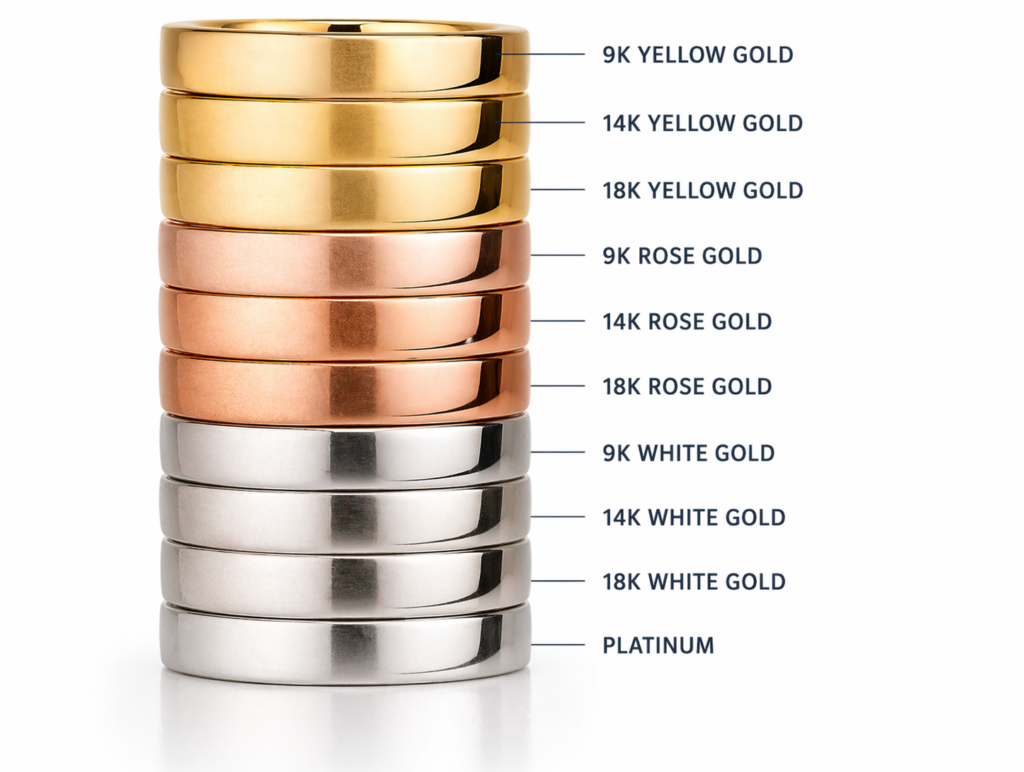
The metal blended with gold does more than affect hardness — it defines colour and wearability. Copper lends gold its romantic rose warmth and meaningfully increases strength. Silver maintains the classic yellow hue without dramatically altering hardness. Nickel provides a substantial durability boost and creates white gold, though some wearers with sensitive skin may react to it. Every combination offers a unique personality, and I choose alloys with both beauty and longevity in mind.
Colour & Hardness in Practice
Yellow gold’s hardness tracks closely with its karat rating. White gold — alloyed with nickel — is generally harder and well-suited to rings and bracelets that take the most punishment. Rose gold, with its higher copper content, tends to be tougher than yellow gold of equivalent purity, giving you durability alongside a warmth that photographs beautifully
Rings face the most contact with hard surfaces, so hardness really matters here. For engagement rings and wedding bands, 14K or 18K gold strikes an ideal balance. Necklaces and earrings endure less impact, making higher-karat gold a gorgeous choice — though if you wear them daily or store pieces together, a slightly harder alloy will hold its shape better over time.
Gold vs. Platinum
Platinum scores around 4–4.5 on the Mohs scale, making it more scratch-resistant than pure gold. Quality white gold alloys narrow that ga p considerably, offering exceptional durability at a lower weight and often a more accessible price point. The right choice comes down to your lifestyle, skin tone, and the look you love.
Relative Cost Comparison
Here’s a rough guide to how different metals compare in price, using 18K white gold as the benchmark (100%). These are approximate figures — actual pricing moves with market gold rates, craftsmanship, and design complexity:
|
Metal |
Relative Cost |
Notes |
|
9K Yellow Gold |
~55-65% |
Most affordable gold option |
|
14K Yellow Gold |
~72-79% |
Popular, great value & durability |
|
18K Yellow Gold |
~92-95% |
Rich colour, slightly softer |
|
9K Rose Gold |
~55-65% |
Budget-friendly, romantic warmth |
|
14K Rose Gold |
~58-68% |
Durable with warm pink hue |
|
18K Rose Gold |
~90-95% |
Deep rose tone, slightly softer |
|
9K White Gold |
~45-55% |
Entry-level white gold |
|
14K White Gold |
~65-75% |
Hard-wearing everyday choice |
|
18K White Gold |
100% |
Benchmark - premium white gold |
|
Platinum |
89-91% |
Rarest, densest, most durable |
These figures reflect metal costs only. Design, stone-setting, and finishing all contribute to the final price. I’m always happy to walk you through what’s right for your budget and vision.
Choosing the Right Gold for You and Your Life
Every person’s relationship with their jewellery is different. If you reach for the same ring every day — through cooking, typing, sport, and sleep — a harder alloy in a lower karat will serve you beautifully for decades. If a piece is reserved for special moments and carefully stored in between, the deep glow of 18K adds something that simply can’t be replicated. I design each piece with this in mind, so the gold I recommend is always the one that will keep looking its best for you, specifically.
Crafted with Design Style and Emotion — robertyoungjewellery.com.au